English
 Français
 Deutsch
 Italiano
 Русский
 Español
 简体中文
简体中文 हिन्दी
 日本語
日本語
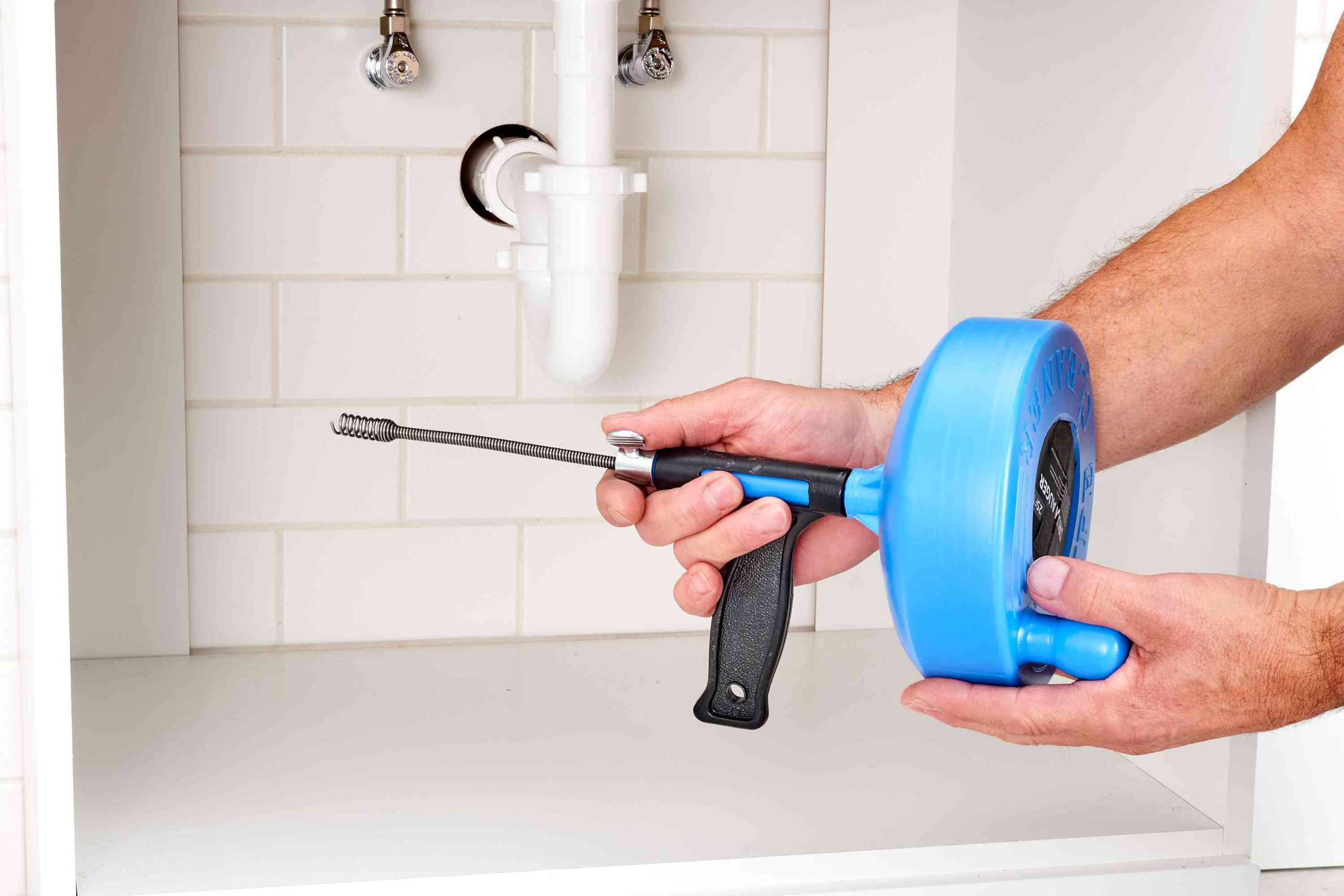
A drain snake, a straightforward and low-cost tool, effectively cleans slow-draining or clogged drains in your home. This flexible metal cable can easily snag and remove soft-debris clogs, saving you time and money that would otherwise be spent on a plumber. Most common drain clogs can be managed using this device, making it an essential tool for any DIY enthusiast.
What Is a Drain Snake?
A drain snake, also called a drain auger, is a thin, flexible metal cable that snags clogs deep in drains and pulls them out.
When to Snake a Drain
Use a drain snake when your sink, shower, or tub drain is draining slowly or is not draining at all due to soft clogs located up to 15 to 25 feet down the line.
Snaking or augering a drain solves drainage problems that cannot be cured by chemicals or plunging because it can pull the clog backward.
The Spruce / Kevin Norris
How a Drain Snake Works
A snake’s cable can be up to 25 feet long. The end of the cable has a corkscrew-type spring that removes clogs in drains.
Pushed by hand, the cable uncoils from the drum and advances through the drain. When the corkscrew end of the snake cable encounters an obstruction, the drum is locked into place, allowing the cable to turn. By turning, its sharp end snags the obstruction and holds onto it, where it can then be pulled back and removed.
Safety Considerations
Wear safety glasses and gloves. If the drain contains liquid drain openers, flush it with water before snaking it. If water is not draining, be careful when pulling out the drain snake to avoid splashback. Do not pour caustic chemicals into the drain before snaking it.
What You’ll Need
Equipment / Tools
- Drain snake
- Bowl or shallow bucket
- Rags
- Old towels
- Plug wrench (for tubs and showers)
Materials
- Paper towels (optional)
Instructions
The Spruce / Kevin Norris
Instructions
-
Remove Traps or Drains
Depending on the type of drain—sink, shower, or tub—you may be able to remove the first section of drainage pipe, making it easier to move the drain snake into the pipes:
- Sinks: Under the sink cabinet, remove the P-trap. The P-trap is the 1-1/4- to 2-inch-diameter curved pipe shaped like the letter P. Unscrew the plastic nuts. Release the P-trap and drain the collected water in a container.
- Bathtubs: The trap can be accessed through the overflow portion of the drain. A manual snake may be difficult to use here; an electric snake is much better at getting around the trap and down the pipes.
- Showers: Gently pry off any screens or covers with a flat-head screwdriver. Using a plug wrench, remove the drain by turning it counterclockwise.
Credit: The Spruce / Kevin Norris
-
Extend Cable
Loosen the thumbscrew on the drum of the drain snake. By hand, extend the cable and push it into the drain pipe. Stop when you reach an obstruction.
Credit: The Spruce / Kevin Norris
-
Snag Obstruction
Tighten the thumbscrew on the drum. Slowly rotate the drain snake handle two or three times.
Credit: The Spruce / Kevin Norris
-
Retract Cable
Loosen the thumbscrew once again. By hand, slowly pull the cable back toward you. Pull the cable straight out; avoid turning it.
Credit: The Spruce / Kevin Norris
-
Clear Drain Snake
Clear the debris from the end of the drain snake. Twist the debris counter-clockwise to remove it; you may need to use a paper towel or other disposable cloth to remove and dispose of the clog.
Credit: The Spruce / Kevin Norris
-
Continue Clearing Pipe
If you believe that there are additional clogs, repeat the process, beginning with the first step. Since you cannot test drain flow without reassembling the sink’s drainpipe, it’s often best to continue snaking the drain until you have reached the end of the cable.
Credit: The Spruce / Kevin Norris
-
Test Drain Flow
Reassemble the drainage pipe. Run the water to test for drainage.
Credit: The Spruce / Kevin Norris
-
Clean Drain Snake
After snaking the drain, it is important to wash off the drain snake. Bacteria-laden debris and hair will be contained on the spring and along the cable and should not be retracted into the drum. Also, if the cable is left wet, it will rust. After washing the cable, let it dry.
Credit: The Spruce / Kevin Norris
Preventing Drain Clogs
The best way to unclog a drain is to avoid clogs in the first place. With proper drain maintenance, you should rarely, if ever, need to unclog the drain:
- Use a strainer: Add strainers or filters to all drains in the home.
- Clean the strainers: Regularly clean off the drain strainers in the trash (do not clean them in the sink).
- Clean the traps: Once a year, disassemble the J- or P-traps under sinks and clean them out.
- Keep solids out of the drains: Do not send toilet paper, hair, old medicine, or any solid materials down the drain.
- Bathe pets outdoors: Have a professional groom the dogs or cats or wash them yourself outdoors.
When to Call a Professional
Call a plumber when the distance of the clog exceeds the length of your drain snake, usually 15 feet or 25 feet. Drain snakes cannot cut through obstructions. Call a plumber or a rooter-type service for cutting through and dislodging solid items like tree roots.
-
Should you run water right before using a drain snake?
Do not run water before using the drain snake. While a drain snake can move through water-filled pipes if necessary, it’s best if the pipes are clear and as dry as possible.
-
How is snaking a drain different in a shower versus a sink?
When unclogging a shower versus a sink, you are not able to access and remove the shower’s J- or P-trap, as you would with a shower, This makes snaking a shower more difficult than snaking a sink. So, be patient when working the auger through the first part of the shower drain.
Read the full article here